


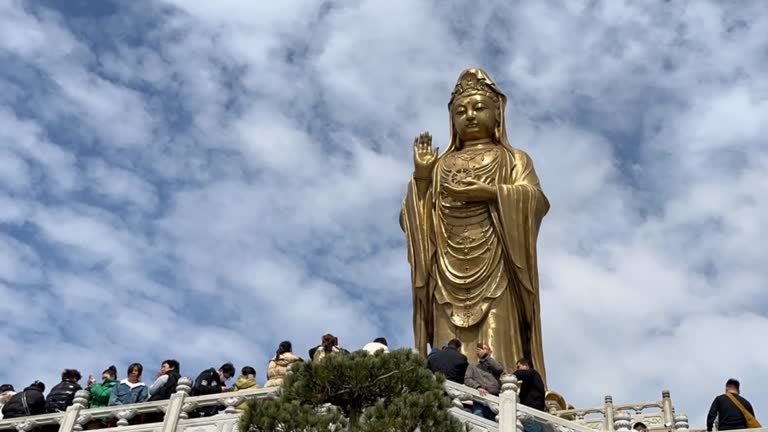
Conquering Calm: An In-Depth Guide to Visiting Putuo Mountain
Putuo Mountain (普陀山, Pútú Shān), a sacred Buddhist island off the coast of Zhejiang Province, China, offers a unique blend of spiritual serenity and breathtaking natural beauty. This isn't just a sightseeing trip; it's a journey into a world steeped in history, faith, and tranquility. However, navigating this idyllic island requires careful planning. This comprehensive guide will equip you with the essential travel tips to ensure a truly enriching and memorable experience on Putuo Mountain.
I. Timing is Everything: Choosing the Best Time to Visit
As suggested by Top China Travel and echoed by countless travelers, the optimal time to visit Putuo Mountain is during the summer months, from July to September. The weather during this period is generally pleasant, with warm temperatures and relatively low humidity. However, this popularity also translates into larger crowds – a trade-off you'll have to consider.
Outside of this peak season, you’ll encounter fewer crowds but potentially less-than-ideal weather. Spring (April-June) and autumn (October-November) offer milder temperatures but increased chances of rain. Winter (December-March) brings cooler temperatures, potential strong winds, and a higher chance of ferry cancellations due to inclement weather. Therefore, carefully weigh your priorities: fewer crowds versus optimal weather conditions.
II. Preparation: Navigating the Island with Ease
Putuo Mountain's charm lies partly in its unspoiled, almost rustic nature. While this adds to its appeal, it also means navigation can sometimes be challenging. Following these preparation steps will greatly improve your experience:
- Learn Basic Mandarin Phrases: While English is spoken in tourist areas, knowing a few basic Mandarin phrases, such as "hello" (你好, nǐ hǎo), "thank you" (谢谢, xiè xie), and "excuse me" (对不起, duì bu qǐ), will significantly enhance your interactions with locals.
- Download Offline Maps and Translation Apps: Reliable internet access isn't guaranteed everywhere on the island. Download offline maps (like Google Maps or Maps.me) and a translation app (like Pleco or Google Translate) before your departure.
- Take Photos of Destination Names: As recommended by Windhorse Tour, taking photos of temple names and key locations in both English and Chinese will prove invaluable when asking for directions. Pointing at a photo is often more effective than struggling with pronunciation.
- Pack Appropriately: Comfortable walking shoes are a must, as you'll be doing a significant amount of walking. Dress modestly when visiting temples – shoulders and knees should be covered. Bring sunscreen, a hat, and sunglasses, regardless of the season. Don't forget insect repellent, especially during the summer months.
- Currency and Payment: While some establishments accept credit cards, it's best to have sufficient Chinese Yuan (RMB) in cash for smaller purchases and smaller vendors.
III. Embracing the Crowds: Managing the Tourist Influx
Putuo Mountain is a major pilgrimage site, attracting millions of visitors annually. Expect large crowds, particularly during peak seasons and national holidays. To mitigate the impact of crowds:
- Visit During Off-Peak Hours: Consider visiting temples and key attractions early in the morning or late in the afternoon to avoid the largest throngs.
- Plan Your Itinerary: Research the key attractions you want to visit and plan your route accordingly. This will help you to maximize your time and minimize wasted wandering.
- Be Patient and Respectful: Remember that you're sharing this sacred space with many others. Practice patience and respect for fellow visitors and the local community.
- Consider a Guided Tour: A guided tour can offer a more structured and efficient way to see the island, helping you navigate the crowds and learn more about the history and culture of Putuo Mountain.
IV. Immersing Yourself in Buddhist Culture: Beyond the Tourist Trail
Putuo Mountain's spiritual significance is undeniable. To fully appreciate the island, make an effort to engage with its rich Buddhist heritage:
- Visit Key Temples: Fayu Monastery (法雨寺, Fǎyǔ Sì) is the most prominent temple on the island, a must-see for its historical significance and stunning architecture. Explore other significant temples like Puji Temple (普济寺, Pǔjì Sì) and Huijiang Temple (慧济寺, Huìjì Sì), each with its own unique atmosphere and history.
- Observe Buddhist Practices: Take the time to observe the daily rituals and ceremonies performed at the temples. This can offer a deeper understanding of Buddhist practices and traditions.
- Reflect and Meditate: Find a quiet spot on the island – perhaps by the sea or amidst the lush vegetation – and take some time for reflection and meditation. The serene environment is conducive to inner peace.
- Participate in a Buddhist Ceremony (if possible): If your visit aligns with a special event or ceremony, consider attending. This will offer a truly immersive cultural experience.
V. Getting There and Around
Reaching Putuo Mountain involves a journey to Zhoushan, followed by a ferry to the island. Detailed information on ferry schedules and transportation within the island can be found on various online travel agencies and websites. Local buses are available on the island for getting around, though walking is often the most enjoyable way to explore, especially for those wanting to appreciate the scenery and atmosphere.
VI. Conclusion
Putuo Mountain offers a unique and rewarding travel experience. By carefully planning your trip and following these tips, you can navigate the island with ease, immerse yourself in its rich culture, and create memories that will last a lifetime. Remember to approach your visit with respect, patience, and an open heart, and you'll find yourself captivated by the spiritual beauty and tranquility of this remarkable island.


